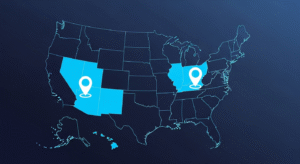





California’s climate disclosure laws aren’t coming anymore. They’re here. CARB unanimously adopted the final SB 253 implementing regulations on February 26, 2026 (National Law Review, 2026), and the first filing deadline is now less than four months away. If your company earns over $1 billion in revenue and does business in California, August 10, 2026 is your date.
Yet the timeline doesn’t stop there. Scope 3 reporting, third-party assurance requirements, and escalating scrutiny roll out over the next several years. Meanwhile, SB 261’s climate risk disclosure mandate remains stuck in litigation. It’s a lot to track.
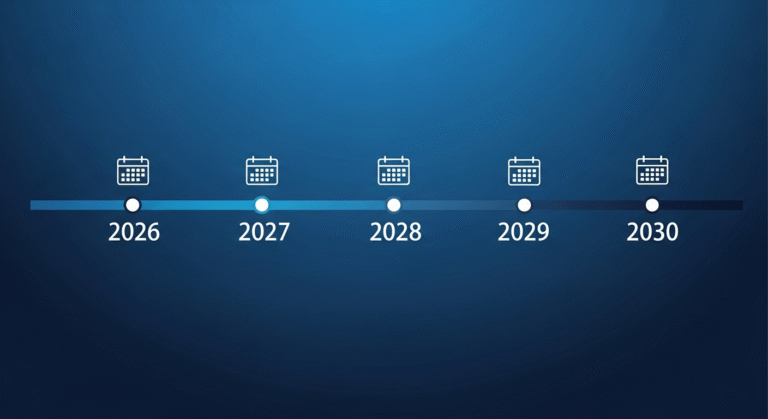
This post breaks down every critical date, from the first filing through 2030 and beyond. We’ve mapped penalties, assurance escalation, and CARB’s rulemaking milestones so you can plan backward from each deadline. No guessing required.
Related: For a full overview of the law, see our complete guide to California SB 253.
Key Takeaways
- First SB 253 filing deadline: August 10, 2026 (Scope 1 and 2 only, no assurance required)
- Scope 3 reporting and limited assurance for Scope 1 and 2 begin in 2027
- SB 261 remains enjoined; trial set for October 2026
- Missing the SB 253 deadline carries penalties up to $500,000 per year (California statute)
- ~4,160 entities are on CARB’s preliminary list across both SB 253 and SB 261 (Harvard Law Forum, 2025)
The Clock Is Ticking: Why the SB 253 Deadline Is Closer Than You Think
CARB’s board adoption on February 26, 2026 made the SB 253 reporting deadline official, with ~4,160 entities across both SB 253 and SB 261 now on the clock (Harvard Law Forum, 2025). The first filing is due August 10, 2026. That’s months away, not years. Companies tracking emissions for fiscal years ending in 2025 should already be deep into data collection.
What makes this urgent? Unlike the SEC’s climate disclosure rule, which faced repeated delays and political reversals, SB 253 survived its initial legal challenges. CARB’s rulemaking process wrapped up on schedule. The regulations are final. The portal is being built. And the penalties are steep.
If you haven’t started, you’re already behind. But you’re not out of time. The key is understanding exactly what’s required and when, so you can prioritize correctly.
How Did We Get Here? A Quick Legislative History
Governor Gavin Newsom signed both SB 253 and SB 261 into law on October 7, 2023, making California the first U.S. state to mandate corporate climate disclosures at this scale (Harvard Law Forum, 2025). But the journey from signature to enforcement was anything but smooth.
Here’s how the key events unfolded:
Sources: CARB, National Law Review, Jones Day, Harvard Law Forum
What Does the SB 253 Reporting Timeline Look Like Year by Year?
The SB 253 timeline rolls out in stages, starting with basic Scope 1 and 2 reporting and building toward full Scope 3 disclosure with reasonable assurance by 2030 (PwC, 2025). Each year adds new requirements. Understanding this escalation is the difference between scrambling and staying ahead.
2025 (Fiscal Year): The Tracking Year
This is the first reporting year under SB 253. Companies must begin tracking Scope 1 (direct) and Scope 2 (purchased energy) greenhouse gas emissions for any fiscal year ending in 2025. No filing is due yet, but the data you collect now becomes the basis for your August 2026 submission.
Don’t underestimate this step. 83% of companies report significant difficulty accessing the data they need for emissions reporting (TCFD Status Report, cited in WRI/GHG Protocol analysis). Setting up collection systems, identifying data gaps, and establishing internal workflows takes longer than most teams expect.
August 10, 2026: The First Filing Deadline
This is the date circled on every compliance officer’s calendar. Scope 1 and Scope 2 emissions must be reported to CARB. No third-party assurance is required for this first filing. The annual filing fee is approximately $3,106 (Inside Energy & Environment, 2025).
What do you actually need to submit? Your total Scope 1 and 2 emissions, broken down by GHG category, along with the methodology used. CARB’s reporting portal will specify the exact format, but the data requirements align closely with the GHG Protocol Corporate Standard.
Key Detail: Even though assurance isn’t required in 2026, the data still needs to be defensible. CARB retains enforcement authority, and reported numbers become part of the public record. Don’t treat this as a soft launch.
2027: Scope 3 Enters the Picture
The complexity jumps significantly in 2027. Companies must now report Scope 3 (value chain) emissions for fiscal year 2026 data. Limited assurance also kicks in for Scope 1 and 2 emissions, meaning you’ll need an accredited third-party verifier.
Scope 3 is where most companies struggle. It covers 15 categories of indirect emissions, from purchased goods and services to employee commuting and end-of-life treatment of products. But here’s the good news: SB 253 includes a safe harbor provision for Scope 3 data. Good-faith estimates won’t trigger penalties.
Assurance costs typically range from $150,000 to $500,000 depending on company size and complexity (EcoVadis, 2025). Start vetting assurance providers now, not in 2027.
2028-2029: Maturation Period
During this window, limited assurance continues for Scope 1 and 2 emissions. Scope 3 data quality is expected to improve as companies refine their collection methods and supplier engagement programs. CARB may issue additional guidance based on patterns observed in the first few reporting cycles.
Think of these years as the bridge between early compliance and full accountability. Companies that invested in robust data systems early will find these filings routine. Those that didn’t will still be chasing supplier data and patching gaps.
2030 and Beyond: Full Assurance
Starting in 2030, the assurance bar rises substantially. Reasonable assurance replaces limited assurance for Scope 1 and 2 emissions. Limited assurance begins for Scope 3 data. This is the end state California envisions: fully verified, comprehensive climate disclosures across all three scopes.
Reasonable assurance is a higher standard, closer to what you’d expect in a financial audit. Your assurance provider will test underlying data, not just review processes. That means your emissions data infrastructure needs to be audit-grade well before 2030.
Sources: CARB final regulations (Feb 2026), PwC, Inside Energy & Environment
What Is the Current Status of the SB 261 Timeline?
SB 261 was originally set to require its first climate risk reports by January 1, 2026. However, the Ninth Circuit issued a preliminary injunction in November 2025, blocking enforcement entirely (Jones Day, 2025). A trial is currently scheduled for October 2026, and oral arguments were heard on January 9, 2026 (Akin Gump, 2026).
SB 261 targets a broader set of companies than SB 253. Any entity with over $500 million in annual revenue doing business in California would need to publish a biennial climate risk report aligned with the TCFD framework. That means physical risk assessments, transition risk analysis, and board-level governance disclosures.
So what should affected companies do right now? Don’t ignore SB 261 entirely. If the injunction is lifted after the October 2026 trial, reporting obligations could snap into effect quickly. Companies already preparing TCFD-aligned disclosures for European or SEC requirements are well positioned. Those starting from scratch should at least map their climate risk exposure.
Sources: Jones Day (2025), Akin Gump (2026), Ninth Circuit Court Records
What Was CARB’s Rulemaking Timeline?
CARB’s rulemaking process spanned nearly two years, culminating in the unanimous board adoption of final SB 253 regulations on February 26, 2026 (National Law Review, 2026). Understanding this process helps explain why the rules look the way they do, and where further changes might come.
Here’s how the rulemaking unfolded:
- May 2025: CARB held its first public workshop, gathering stakeholder input on reporting scope, thresholds, and methodology.
- August 2025: Draft regulations were released for review. Industry groups flagged concerns about Scope 3 feasibility and assurance timelines.
- November 2025: Formal public comment period opened. CARB received hundreds of comment letters from companies, trade associations, and environmental groups.
- February 26, 2026: CARB board unanimously adopted the final regulations, setting the August 10, 2026 filing deadline.
- March 2026: CARB hosted a post-adoption guidance workshop to clarify reporting portal details and data format requirements.
Are more rulemakings coming? Almost certainly. CARB has signaled that additional guidance on Scope 3 methodology, sector-specific reporting, and assurance standards will follow in 2026 and 2027. The current regulations are a foundation, not the final word.
How Do Assurance Requirements Change Over Time?
Assurance is where compliance costs escalate most sharply. Third-party verification costs range from $150,000 to $500,000 annually depending on company complexity (EcoVadis, 2025). The requirements phase in gradually, giving companies time to build audit-ready data systems before the highest standards apply.
| Year | Scope 1 & 2 | Scope 3 | Assurance Standard |
|---|---|---|---|
| 2026 | Required | Not required | None |
| 2027 | Required | Required | Limited (Scope 1 & 2) |
| 2028-2029 | Required | Required | Limited (Scope 1 & 2) |
| 2030+ | Required | Required | Reasonable (Scope 1 & 2), Limited (Scope 3) |
Start Now, Not in 2027: We’ve found that the gap between tracking emissions and having assurance-ready data is typically 12-18 months of system improvements. If you wait until assurance is mandatory, you’ll likely miss your window. Building verification-grade processes now saves you from emergency upgrades later.
Source: CARB final SB 253 regulations (Feb 2026)
What Happens If You Miss a Deadline?
The penalties are significant. SB 253 carries fines of up to $500,000 per reporting year for non-compliance, while SB 261 (if enforcement resumes) caps penalties at $50,000 per year (California statute). Those numbers aren’t hypothetical; CARB has explicit enforcement authority written into the regulations.
However, there are some nuances worth understanding:
- Safe harbor for Scope 3: Companies making good-faith efforts to report Scope 3 emissions won’t face penalties for data inaccuracies. This recognizes the genuine difficulty of measuring value chain emissions.
- CARB enforcement discretion: The board can consider a company’s compliance history, good-faith efforts, and remediation steps when assessing fines.
- Escalation risk: Repeated failures to file will likely result in escalating penalties, not just flat annual fines.
Is the $500,000 cap actually the worst case? Not necessarily. Reputational damage from being publicly listed as non-compliant could cost far more. CARB’s reporting data will be publicly accessible, and investors, customers, and advocacy groups will be watching.
Don’t Count on Leniency: While CARB has enforcement discretion, the agency has consistently signaled it intends to enforce deadlines firmly. Companies hoping for a “soft start” or grace period should plan for full compliance from day one.
How Should You Build Your Compliance Calendar?
Working backward from the August 10, 2026 deadline is the most reliable approach. CARB estimates annual compliance costs of $135,000 to $152,000 per reporting entity (CARB, 2026), and much of that cost comes from the data collection and internal review phases that need to happen months before filing.
Here’s a practical quarterly breakdown:
Q2 2026 (April-June): Data Collection and Gap Analysis
Finalize your Scope 1 and 2 emissions inventory for FY 2025. Identify any data gaps. If you’re pulling utility bills, fuel purchase records, and refrigerant logs, this is when everything needs to come together. Run an internal quality check against the GHG Protocol methodology.
Q3 2026 (July): Internal Review and Submission
Leave at least four weeks for internal review before the August 10 deadline. Have your sustainability team, finance, and legal sign off. Format data according to CARB’s portal specifications. Submit with time to spare for any technical issues with the portal.
Q3-Q4 2026: Prepare for Year Two
Immediately after filing, shift focus to Scope 3. Start engaging key suppliers for emissions data. Begin vetting third-party assurance providers for the 2027 limited assurance requirement. This work can’t wait until January.
Source: CARB compliance guidance (2026)
How Credibl ESG Helps
Credibl ESG’s AI-powered platform helps companies streamline Scope 1, 2, and 3 data collection across operations and supply chains. Rather than chasing spreadsheets and manual calculations, teams can automate emissions tracking, identify data gaps early, and generate CARB-ready reports.
The platform also supports assurance readiness by maintaining audit trails and documentation standards that third-party verifiers require. For companies approaching their first SB 253 filing, Credibl ESG offers a structured onboarding process designed to compress the timeline from months to weeks.
Frequently Asked Questions
What is the first SB 253 reporting deadline?
The first SB 253 filing deadline is August 10, 2026. This initial submission covers Scope 1 and Scope 2 greenhouse gas emissions only. No third-party assurance is required for this first filing. Companies must pay an annual filing fee of approximately $3,106 to CARB (Inside Energy & Environment, 2025).
When does Scope 3 reporting start under SB 253?
Scope 3 emissions reporting begins in 2027, covering fiscal year 2026 data (PwC, 2025). Companies will need to disclose value chain emissions across all 15 GHG Protocol categories. A safe harbor provision protects companies making good-faith Scope 3 estimates from penalties related to data inaccuracies.
Is SB 261 still in effect?
SB 261 is currently enjoined. The Ninth Circuit issued a preliminary injunction in November 2025 blocking enforcement (Jones Day, 2025). A trial is set for October 2026. If the injunction is lifted, companies with over $500 million in revenue will need to file biennial climate risk reports aligned with the TCFD framework.
What are the penalties for missing the SB 253 deadline?
Non-compliance with SB 253 can result in fines of up to $500,000 per reporting year. SB 261 carries lower penalties of up to $50,000 per year. CARB has enforcement discretion and may consider good-faith compliance efforts. However, the agency has signaled it intends to enforce deadlines firmly from the first reporting cycle.
When does third-party assurance become required?
Limited assurance for Scope 1 and 2 emissions starts in 2027. Reasonable assurance for Scope 1 and 2 begins in 2030, alongside limited assurance for Scope 3. Assurance costs range from $150,000 to $500,000 annually depending on scope and complexity (EcoVadis, 2025). Start vetting providers now.
Conclusion
The SB 253 reporting timeline is no longer a future concern. With the first deadline set for August 10, 2026, companies need to be collecting Scope 1 and 2 data right now. The requirements only grow from here: Scope 3 in 2027, limited assurance the same year, and reasonable assurance by 2030.
SB 261 remains in legal limbo, but that shouldn’t breed complacency. If the injunction lifts after the October 2026 trial, climate risk reporting obligations could activate quickly. Companies already building TCFD-aligned processes will have a clear advantage.
The smartest move? Treat August 10, 2026 as the starting line, not the finish. Build systems that scale with escalating requirements. Invest in data quality and supplier engagement early. And don’t wait for assurance mandates to start building verification-ready processes.
Related: Ready to act? Follow our step-by-step SB 253 compliance preparation guide.
Ready to Build Your SB 253 Compliance Calendar?
See how Credibl ESG’s platform can help you meet your first filing deadline with confidence.
Book a Demo