




Introduction
Sustainability reporting is no longer optional — it’s fast becoming a baseline expectation from investors, regulators, customers, and other stakeholders. But the path from raw data to credible disclosures is complex. The right sustainability reporting software can turn this complexity into clarity, efficiency, and strategic insight.
What is sustainability reporting software?
Sustainability reporting software (often branded as ESG reporting or sustainability management tools) is a digital system that helps organizations collect, consolidate, analyze, and publish ESG and environmental data. Rather than gathering numbers in disconnected spreadsheets, these platforms enable automated data ingestion from multiple sources (energy meters, procurement systems, HR data, etc.), enforce data governance and validation, and output standardized reports aligned with frameworks such as GRI, CSRD, TCFD, SASB, and more.
The value lies in shifting ESG disclosure from a manual, ad-hoc process to a governed system: you get audit trails, version control, real-time dashboards, and consistency across business units. In short, sustainability reporting software helps turn ESG disclosures from a compliance chore into a decision-enabling capability.
What features to look for in sustainability reporting software
When comparing platforms, here are the features that separate good tools from great ones:
| Feature | Why it matters |
| Full ESG scope coverage (Scopes 1, 2, 3 + social & governance metrics) | You want a platform that doesn’t force you to omit material domains or you’ll lose credibility. |
| Framework & standards support / mapping | The tool should natively support GRI, CSRD/ESRS, TCFD, SASB, etc., so you can generate disclosure-aligned reports. |
| Data quality & audit capabilities | Built-in validation, audit trails, version control, and ability to attach evidence help with assurance. |
| Integration & automation | Ability to pull data from ERP, energy systems, procurement, travel management, etc. saves time and errors. |
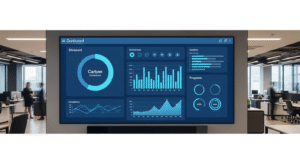
| Analytics, dashboards & visualisation | Executives, operations, and sustainability teams need compelling visuals and insights, not just raw tables. |
| Supplier / value chain engagement | For Scope 3 and upstream impacts, the tool should let suppliers input data, or support approximation methods with documented assumptions. |
| Scalability, modularity & extensibility | The platform should work for SMEs yet grow with you — modular features or API-based extension help. |
| User experience & support | Even the best tool is useless if users can’t adopt it; training, documentation, onboarding support matter. |
The 14 Best Sustainability Reporting Platforms in 2025
- Credibl
Credibl is an AI-powered ESG and sustainability data management and reporting platform. It helps organizations measure against 1,000+ ESG KPIs, automate workflows, and negotiate disparate data into a single source of truth. Its features include an AI virtual assistant for querying ESG data, a heatmap to flag data irregularities, and built-in reporting templates for CSRD, ESRS, CDP, SASB, etc. Credibl also supports supplier data collection and traceability, making it suitable for companies managing complex supply chains. Credibl is ideal for firms that want to integrate AI and automation into their ESG workflow, especially in emerging markets where regulatory demands are evolving quickly.

- Microsoft Sustainability Manager (Microsoft Cloud for Sustainability)
Microsoft Sustainability Manager is a core component of Microsoft’s sustainability offering. It is designed to unify environmental data, automate routine calculations, and generate live sustainability insights. The platform supports integration with any business system, providing unified metrics across emissions, water, waste, and even social/governance data. It uses Microsoft’s data model to reduce data ambiguity and can be extended using Power Platform and Azure tools to tailor reports or logic. Because it is built within the Microsoft ecosystem, organizations already using Azure or Microsoft’s enterprise stack may find it easier to adopt.
- Salesforce Net Zero Cloud
Salesforce Net Zero Cloud (formerly Sustainability Cloud) helps companies manage ESG data within their broader Salesforce ecosystem. It aggregates emissions, energy, waste, and operational metrics into dashboards, enabling scenario modelling and forecasting of climate targets. It supports automated report generation aligned with frameworks like CSRD, GRI, and TCFD, leveraging Salesforce’s analytics capabilities. Because it is built on the Salesforce platform, it integrates naturally with customer, supply chain, and operational data — useful for organizations already in the Salesforce environment. It is especially compelling for companies that want ESG data tied to operational and customer systems without building a separate stack.
- IBM Environmental Intelligence Suite
IBM’s Environmental Intelligence Suite (EIS) integrates climate risk analytics, weather data, and carbon accounting into a unified platform. It enables organizations to access geospatial APIs, weather forecasts, and environmental hazard alerts alongside sustainability metrics. The tool is strong in blending operational resilience with sustainability reporting — for instance, identifying how a flood might impact operations while incorporating emissions impacts. IBM’s acquisition of Envizi helps provide a robust data foundation for auditable ESG metrics and progress tracking toward carbon reduction goals. Its strength lies in catering to large enterprises with complex environmental and risk exposure profiles.
- Diligent ESG
Diligent’s ESG module extends its existing risk, compliance, and governance offerings into the sustainability domain. Its ESG platform collects data across internal teams, integrates supplier inputs, and enables alignment with global frameworks like SASB, GRI, and TCFD. It provides a built-in carbon calculator, audit readiness, and dashboard views to help governance teams oversee ESG performance. For companies already invested in Diligent’s board and compliance tools, adopting its ESG module offers a smoother, integrated experience. It’s well-suited to organizations that prefer to keep governance, risk, and sustainability workflows under one umbrella.
- Novisto
Novisto is a relatively mature ESG management platform with a strong focus on automation and governance control. It enables organizations to centralize ESG data, run complex calculations, manage workflows and approvals, and publish disclosure-ready reports. Novisto remains current with evolving regulations — for instance, it supports European CSRD compliance — making it particularly useful for firms operating across global jurisdictions. Its audit-ready controls and hierarchical approval workflows help sustainability teams maintain data integrity. As Novisto continues to expand globally, it appeals to enterprises seeking a scalable, end-to-end ESG reporting solution.
- Pulsora
Pulsora is an ESG reporting and management platform that consolidates data collection, KPI tracking, and report generation in a single tool. It supports more than a dozen reporting frameworks (GRI, ISSB, CDP, etc.), which is valuable for companies navigating multiple disclosure demands. The software also covers full carbon accounting (Scopes 1–3), supplier survey capabilities, and dynamic dashboards for monitoring performance. Pulsora’s appeal lies in its built-in framework flexibility and emphasis on making ESG reporting more seamless across departments and geographies.
- SAP Sustainability Control Tower
SAP Sustainability Control Tower is engineered for companies already operating within the SAP ecosystem. It integrates sustainability metrics with operational data from SAP (and non-SAP) systems to provide a unified ESG dashboard. The tool includes AI-augmented report generation, flexible metric customization, and the ability to embed sustainability KPIs into procurement, production, and finance workflows. Because of its tight coupling with enterprise systems, it’s ideal for manufacturing, energy, or large-scale operations that want sustainability embedded in everyday business decisions.
- AuditBoard (ESG Module)
AuditBoard, known for its governance, risk and audit platform, now offers an ESG module that centralizes sustainability data under the same GRC (governance, risk, compliance) roof. The ESG add-on links metrics to risk registers and compliance workflows, enabling organizations to view ESG through a risk lens. It features AI-assisted narrative generation, pre-mapped frameworks (CSRD, SASB, etc.), and audit trail capabilities. AuditBoard is a strong choice for firms that already treat ESG as part of enterprise risk management and want consistent control over data, workflows, and oversight.
- Novata
Novata is focused on ESG reporting in the private markets context — private equity, venture capital, and their portfolio companies. It provides streamlined data collection via questionnaires, custom metrics tailored for private firms, and benchmarking across portfolios. Novata supports carbon accounting per GHG Protocol and PCAF (Partnership for Carbon Accounting Financials), helping investors gauge financed emissions. Its collaboration features simplify ESG reporting for smaller firms or portfolio companies that may not have full-time ESG teams.
- RepRisk
RepRisk is a specialized tool focused on external ESG risk intelligence. Rather than aggregating internal metrics, it scans news, NGO databases, regulatory sources, and third-party platforms to flag reputational or ESG risks associated with a company or its supply chain. It alerts users to controversies, ESG violations, or negative sentiment, offering early warnings. While not a full internal reporting suite, many organizations combine RepRisk with an internal reporting platform to ensure their disclosure doesn’t miss emerging external tensions.
- Sphera
Sphera is a long-standing player that blends EHS (environment, health, safety) with broader sustainability and ESG reporting. Its sustainability module provides robust environmental metric tracking, emissions accounting, and performance monitoring. It is especially popular in industries like manufacturing, energy, and chemicals due to its strong roots in operational compliance. Sphera’s credibility, depth, and focus on environmental data integrity make it a compelling choice where ESG reporting is closely tied to operational risk management.
- Benchmark ESG (Gensuite)
Benchmark ESG (formerly part of Gensuite) is a platform that brings together risk, quality, compliance, and ESG data under one roof. It offers over 800 predefined ESG metrics/KPIs and supports multiple disclosure frameworks. Its ability to integrate with operational systems means data from procurement or production may feed directly into ESG metrics. Benchmark ESG is well-suited for organizations that want to build ESG reporting into their existing compliance or risk process with minimal disruption.
- Cority
Cority is a unified EHS and ESG platform, allowing environmental, health, safety, and sustainability metrics to be managed in one system. For sustainability reporting, Cority lets organizations roll up emissions, energy, water, waste, social and governance data, all while linking to risk and compliance modules. It helps remove silos between the sustainability and EHS teams and provides consistent controls over data integrity and reporting. It appeals to enterprises that prefer to operate with a single platform coupling environmental operations and strategic ESG narratives.
Conclusion
In 2025, the landscape of sustainability reporting software is rich, with platforms stretching from carbon accounting and ESG disclosure to climate risk, supply chain engagement, and narrative automation. The right tool for your organization depends on your size, maturity, regulatory environment, and existing systems.
If you’re a mid-sized or large company exploring ESG software, Credibl is worth considering. Its AI-powered workflows, broad framework support, supplier integration, and emerging presence in markets like India make it a strong candidate — especially if your focus is automating audit-ready disclosures and scaling evolution. If you want, I can help you compare Credibl head-to-head with a few other platforms from this list for your industry.
See Credibl in action, schedule a live demo to explore how our AI assistant, data governance tools, and framework-ready reporting features can transform your ESG practice.
Frequently Asked Questions (FAQs)
Q1: Can a sustainability reporting tool fit a small or mid-sized organization?
Yes — many platforms now offer modular or scaled-down plans aimed at SMEs. Start with the core features you need (e.g. emissions tracking, simple reporting) and gradually expand. The key is selecting a user-friendly tool, does not force too many features at once and can scale as your program grows.
Q2: How do these tools support reporting across different frameworks (GRI, CSRD, TCFD, etc.)?
Most leading tools include mapping engines or templates that link your internal metrics to external disclosure formats. You typically choose the frameworks relevant to your business and let the software generate drafts or outputs in those formats. Because frameworks evolve, good tools also update mappings over time so you remain compliant.
Q3: What about supplier or value chain (Scope 3) data when suppliers lack tools?
Platforms often provide supplier portals or survey modules that ask suppliers for data in structured form. If suppliers cannot provide detailed data, many tools support default emission factors, estimation methodologies, or spend-based calculations, as long as the assumptions are documented and transparent. Over time, you can refine and replace estimates with actual data.
Q4: How audit-ready are these platforms?
The best tools include version history, user tracking, data validation, and evidence attachment. This gives auditors or assurance providers visibility into how numbers were generated, accepted, or modified. It is still critical that your underlying processes and controls are robust — software supports, but does not replace, control discipline.
Q5: Can you switch from one ESG platform to another later?
Yes, but it can be challenging. The biggest friction is migrating historical data, custom calculation logic, and narrative materials. To ease the transition, prefer platforms that allow data export in interoperable formats and maintain documentation of your logic. A pilot or parallel run before fully switching can help reduce disruption.
Q6: How long does implementation typically take?
It depends on complexity (number of data sources, model sophistication, regulatory context). For simpler deployments, it may take a few weeks; for large enterprises integrating many systems, it may take several months. Estimate and plan for data cleanup, mapping, user training, and pilot testing.