




Introduction
Climate change is no longer a distant concern. Businesses around the world are already feeling the impact of physical climate risks — from floods shutting down factories to droughts disrupting supply chains. These risks are both acute (short-term, such as extreme weather events) and chronic (long-term, including shifts like sea-level rise or changing rainfall patterns).
As regulations such as the Corporate Sustainability Reporting Directive (CSRD) in the EU, ISSB S2 globally, and AASB standards in Australia take hold, companies are expected to disclose how physical risks affect their operations and financial outlook. Those who fail to prepare may face mounting losses, regulatory scrutiny, and investor distrust.
Types of Physical Climate Risks
Physical risks can be grouped into two categories:
- Acute Risks: Sudden, extreme events such as hurricanes, floods, heatwaves, and wildfires. When Hurricane Harvey struck Houston in 2017, it caused over $125 billion in damages, also disrupting oil refineries and global energy supply chains. Events like these highlight the interconnectedness and far-reaching impact of acute risks.
- Chronic Risks: These occur slowly, over years or decades. Rising sea levels, shifting temperatures, and desertification gradually but permanently alter business landscapes. For example, port cities face increased flooding, while agricultural businesses contend with altered growing seasons.
Both types demand proactive planning, as they directly affect business continuity and resilience.
How Physical Risks Affect Businesses
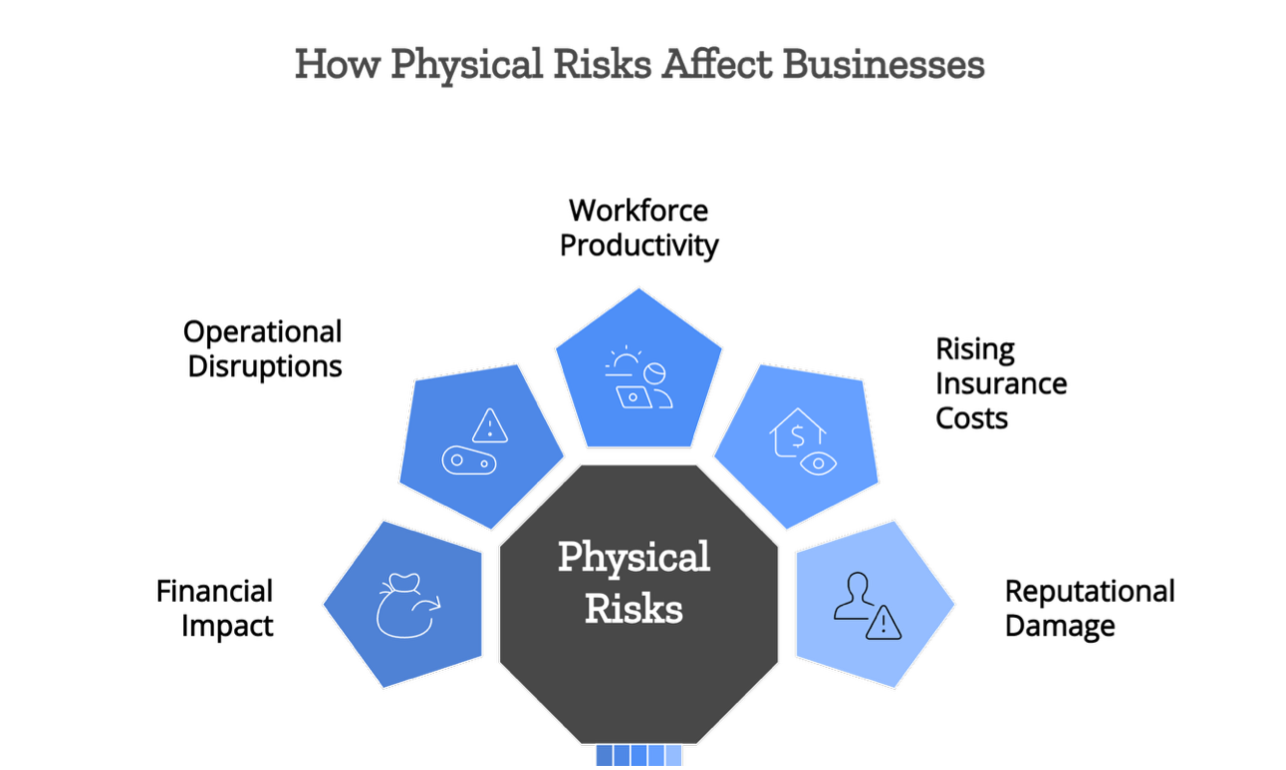
- Financial Impact: Increased insurance premiums, asset write-downs, and unexpected recovery costs.
- Operational Disruptions: Factory shutdowns, logistics delays, and workforce safety issues.
- Workforce Productivity: Chronic heat stress significantly reduces output, particularly in labour-intensive industries such as construction and agriculture.
- Rising Insurance Costs: Companies operating in flood-prone or fire-prone regions face skyrocketing insurance premiums, and some may struggle to secure coverage altogether.
- Reputational Damage: Communities and investors lose trust when companies are unprepared.
Sector-Specific Vulnerabilities
- Agriculture: Crop yields are becoming increasingly variable due to heat and drought, posing a threat to food supply chains.
- Manufacturing and Logistics: From port closures to damaged highways, disruptions in logistics create ripple effects on global trade.
- Energy and Utilities: Hurricanes and heatwaves strain grids, leading to power outages and costly repairs.
- Real Estate: Properties in coastal and flood-prone zones face devaluation, creating stranded assets.
In 2022, natural disasters caused $313 billion in global economic losses (Aon, via Reuters). Flooding alone drives average annual losses of USD 388 billion worldwide (UNDRR).
Measuring and Reporting Physical Risks
The challenge lies not just in experiencing these risks but in quantifying and disclosing them. Regulators and investors expect robust methodologies, including:
- Scenario Analysis: Stress-testing business strategies against different climate pathways (e.g., 1.5°C, 2°C, 4°C).
- Risk Mapping Tools: Using satellite imagery, GIS, and climate modelling to identify vulnerable assets.
- Framework Alignment: Adopting TCFD, ISSB, and CSRD standards that explicitly mandate physical risk disclosure.
For example, Japan’s Toyota restructured its global supply chain to ensure redundancy after the 2011 tsunami, revealing vulnerabilities.
Strategies for Building Resilience
Proactive companies are already adapting by:
- Upgrading infrastructure with flood defences and cooling systems.
- Diversifying suppliers and locations to reduce geographic concentration.
- Transitioning to renewable energy and efficiency projects to lower vulnerability.
- Embedding climate risk into enterprise risk management and board oversight.
Conclusion
Physical climate risks are escalating — but they also present an opportunity. Companies that build resilience not only protect themselves but also win investor confidence, regulatory compliance, and market advantage. Treating these risks as core business strategy rather than externalities is the key to long-term sustainability.
Don’t wait until the next disruption. Future-proof your business with Credibl’s AI-powered ESG platform — built to centralize climate data, automate risk tracking, and deliver audit-ready disclosures.
Book your demo today and turn climate risk into a strategic advantage.
Frequently Asked Questions (FAQ)
- What are physical climate risks?
Physical climate risks are the tangible, negative impacts of climate change on a company’s assets, operations, and supply chain. They can be acute (sudden, extreme weather events like floods and wildfires) or chronic (long-term shifts like rising sea levels and chronic heat stress). - How do physical risks impact a business’s bottom line?
Physical risks can significantly impact a company’s financials through increased insurance premiums, asset devaluation, and unplanned recovery costs. They also cause operational disruptions, such as factory shutdowns and logistics delays, which can harm profitability. - What is the difference between acute and chronic physical risks?
- Acute risks are immediate and event-driven, like a hurricane damaging a distribution centre or a wildfire disrupting a key supplier.
- Chronic risks are gradual and persistent, such as a steady rise in temperatures reducing worker productivity or a long-term drought impacting raw material availability for a food company.
- Why should companies be proactive about these risks instead of reactive?
Proactive companies can build resilience by stress-testing their operations, diversifying their supply chains, and upgrading infrastructure. This not only protects them from future disruptions but also builds trust with investors and regulators who are increasingly demanding climate-related disclosures. - How do companies measure and report on physical risks?
Companies can measure and report on these risks by using scenario analysis to test their business strategies against different climate outcomes and by using risk mapping tools to identify vulnerable assets. They must also align their disclosures with global frameworks, such as the TCFD and ISSB S2, which mandate this type of reporting.