






Introduction
In today’s rapidly changing world, climate risks are no longer an afterthought. They’re becoming a central focus for companies, regulators, investors, and consumers alike. As we move into 2025, businesses are being increasingly expected to address and track climate risks—from physical risks like extreme weather events to transition risks arising from the shift to a low-carbon economy. Companies that fail to adapt may face significant financial, reputational, and regulatory consequences. This blog outlines 15 reasons why every company must track climate risks to ensure long-term sustainability, mitigate risk, and stay ahead of the curve.
Overview
Climate risks can be categorized into three primary types:
- Physical Risks: Risks related to the direct impacts of climate change, such as extreme weather events (floods, wildfires, etc.), rising sea levels, and changing weather patterns.
- Transition Risks: Risks arising from the global transition to a low-carbon economy, including policy shifts (e.g., carbon taxes), market changes, and reputational damage.
- Litigation Risks: Legal exposure due to non-compliance with regulations or failure to disclose climate risks properly.
As businesses increasingly track and disclose these risks, they position themselves to not only comply with evolving regulations but also capitalize on new opportunities and mitigate long-term risks.
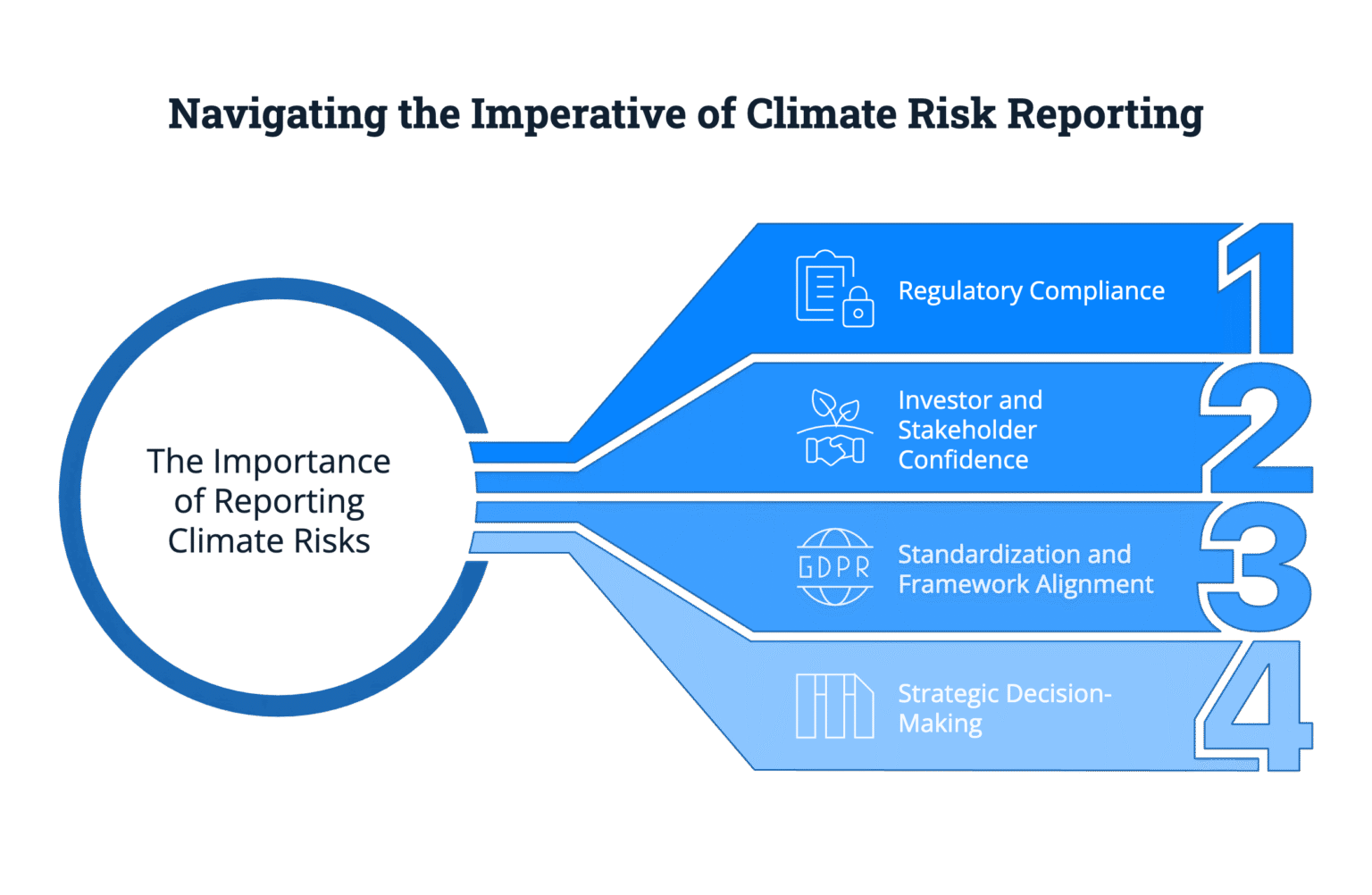
The Importance of Reporting Climate Risks
Reporting climate risks has moved from being optional to a critical business requirement. Accurate disclosure allows companies to demonstrate accountability, build investor confidence, and align with evolving global standards.
- Regulatory Compliance: Governments and regulatory bodies are increasingly mandating climate risk reporting. The EU Corporate Sustainability Reporting Directive (CSRD) requires companies to disclose climate-related impacts and risk management strategies. Similarly, the SEC’s proposed climate disclosure rules in the U.S. push publicly listed companies to provide transparent reporting on climate-related risks. Non-compliance can lead to penalties, reputational damage, and legal challenges.
- Investor and Stakeholder Confidence: Investors are no longer just looking at financial metrics—they are scrutinizing environmental, social, and governance (ESG) performance. Transparent reporting of climate risks signals that a company is proactive, responsible, and prepared for the transition to a low-carbon economy, helping attract ESG-focused investment.
- Standardization and Framework Alignment: Following globally recognized frameworks, such as TCFD (Task Force on Climate-related Financial Disclosures), ISSB, and CDP, ensures that reporting is consistent, comparable, and credible. It also helps businesses benchmark themselves against peers and communicate effectively with stakeholders.
- Strategic Decision-Making: Reporting is not just compliance—it’s a tool for strategic insight. By measuring and disclosing climate risks, companies can identify vulnerabilities in operations, supply chains, and financial performance, and take corrective action before risks become crises.
By integrating climate risk reporting into corporate strategy, companies not only meet regulatory obligations but also strengthen resilience, maintain stakeholder trust, and enhance long-term value creation.
Key Reasons Why Your Company Must Track Climate Risks in 2025
- Regulatory Compliance
Tracking climate risks ensures that your company is compliant with growing global regulations. Whether it’s the CSRD in the EU or the SEC disclosure requirements in the U.S., companies must monitor and report climate risks to avoid legal and financial penalties. - Investor Expectations
Investors are increasingly looking at ESG metrics when making investment decisions. By tracking climate risks and providing transparent reports, companies can enhance their attractiveness to ESG-conscious investors, boosting their chances of securing capital and improving stock performance. - Supply Chain Resilience
Climate-related disruptions such as floods, droughts, and heatwaves can devastate supply chains. By monitoring climate risks, businesses can assess potential vulnerabilities in their supply chains and take proactive steps to build resilience, ensuring continuity of operations. - Financial Impact of Climate Risks
The financial consequences of climate risks can be significant, from direct damages caused by extreme weather events to increased insurance premiums. By tracking these risks, companies can assess potential financial impacts and take necessary precautions to protect their assets. - Long-Term Strategic Planning
Climate risks must be integrated into long-term strategic planning. By identifying potential risks early, companies can develop adaptive strategies to ensure long-term sustainability. This proactive approach helps businesses stay competitive and future-ready. - Competitive Advantage
Companies that actively track and manage climate risks can differentiate themselves in the marketplace. By demonstrating leadership in sustainability and resilience, businesses can enhance their brand reputation, attract customers, and gain a competitive edge over less proactive companies. - Risk Mitigation
Identifying and tracking climate risks allows businesses to implement effective risk mitigation strategies. From physical infrastructure upgrades to adjusting supply chain processes, tracking climate risks enables companies to reduce their exposure to potentially devastating impacts. - Climate Change Adaptation
Adaptation to climate change is essential. Companies need to understand how shifting environmental conditions will affect their operations and supply chains in the future. By tracking climate risks, companies can plan and invest in adaptation measures to safeguard their business continuity. - Enhanced Corporate Reputation
A strong track record in climate risk management enhances corporate reputation. As consumers and stakeholders increasingly demand transparency, companies that proactively address climate risks gain trust and loyalty, leading to a stronger market position. - Access to Government Incentives
Many governments offer financial incentives, such as tax credits or grants, to businesses that actively address climate risks. By tracking and reporting these risks, businesses can take advantage of these programs and reduce operational costs. - Disaster Preparedness
Tracking climate risks enables businesses to better prepare for extreme weather events. Having a robust disaster preparedness plan in place reduces downtime during crises, protects assets, and ensures the swift recovery of operations. - Data-Driven Decision Making
Access to accurate data on climate risks helps businesses make informed, data-driven decisions. Whether it’s choosing locations, investing in new technologies, or allocating resources, tracking climate risks ensures that all decisions align with long-term sustainability goals. - Corporate Social Responsibility (CSR)
Addressing climate risks is a key component of corporate social responsibility (CSR). By tracking and managing climate risks, businesses can contribute to societal well-being and demonstrate ethical and responsible business practices. - Investor and Stakeholder Transparency
Transparency is key to maintaining strong relationships with investors and stakeholders. Regularly tracking and reporting on climate risks builds trust, ensuring stakeholders are confident in the company’s ability to manage future challenges. - Aligning with Global Sustainability Goals
Tracking climate risks is essential for aligning with global sustainability frameworks, such as the UN Sustainable Development Goals (SDGs). By integrating climate risk management into business strategy, companies contribute to global environmental goals and enhance their reputation on the world stage.
Conclusion
Tracking climate risks in 2025 is no longer just an option—it’s a business necessity. By identifying, assessing, and managing these risks, companies can improve their resilience, comply with regulations, attract investors, and secure long-term sustainability. The benefits of tracking climate risks extend beyond mere compliance—they drive strategic value, improve reputation, and ensure a competitive edge in an increasingly climate-conscious world.
Is your company ready to start tracking and reporting climate risks? Credibl provides AI-powered climate risk management tools that help businesses stay ahead of the curve. Contact us today to learn how we can help you build a more sustainable and resilient business.
FAQs
Q1: What are the main types of climate risks a company should track?
A: Companies should monitor physical risks (e.g., extreme weather events), transition risks (e.g., regulatory changes, market shifts), and liability risks (e.g., litigation related to climate impacts or misrepresentation).
Q2: Why is tracking transition risks important for businesses?
A: Transition risks involve changes driven by the global shift to a low-carbon economy. These risks can impact profitability, reputation, and market position if companies fail to adapt to new regulations, technologies, or consumer preferences.
Q3: How can tracking climate risks improve financial performance?
A: By identifying potential disruptions and implementing mitigation strategies, companies can reduce costs, avoid financial losses, and enhance profitability, which ultimately benefits their bottom line.
Q4: How do you integrate climate risks into long-term business strategy?
A: By conducting climate scenario analysis and using data to identify future risks and opportunities, businesses can adjust their strategies, allocate resources effectively, and align their operations with long-term sustainability goals.
Q5: What is the role of data in tracking climate risks?
A: Accurate data is critical for identifying, quantifying, and managing climate risks. It enables businesses to make informed decisions regarding infrastructure, supply chain, investment, and adaptation measures that align with sustainability objectives.